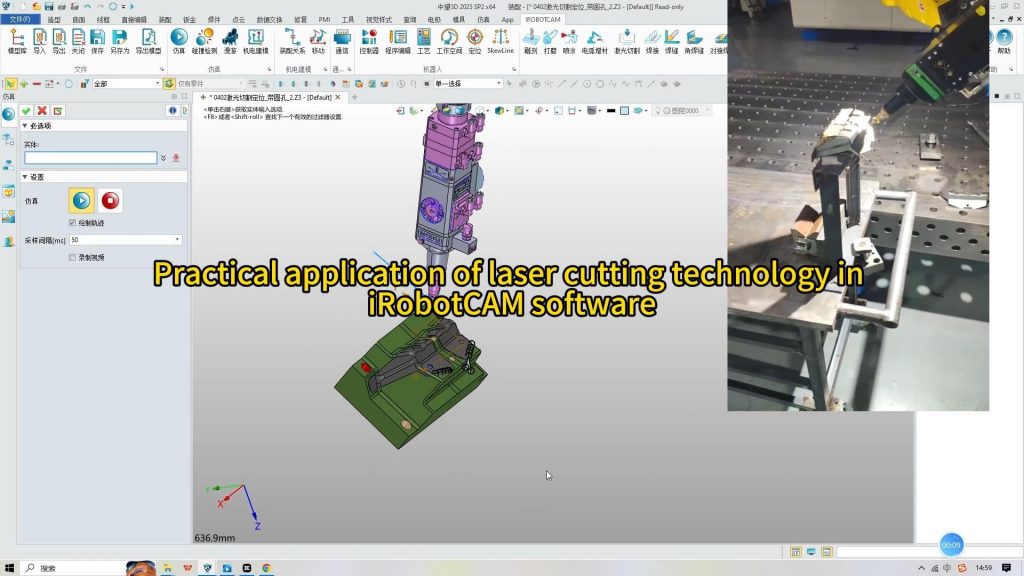
Laser technology has a wide range of applications, with its core strength lying in its balance of low cost and high precision. Taking robotic applications as an example, there are two key points to achieving robotic laser processing: first, the robot must meet the corresponding precision requirements and positioner linkage requirements in terms of hardware; second, the software must support high-precision programming in its architecture. Taking the domestic robot offline programming software iRobotCAM as an example, based on a 3D CAD kernel architecture, it inherently supports trajectory accuracy at the 0.01mm level, fully meeting the high-precision requirements of laser processing.
The development of industrial software capabilities is not limited to domestic or foreign countries; it mainly depends on the continuous iteration of industrial scenarios. In China, due to the widespread application of laser technology, it is only natural that domestic supporting technologies, including hardware and software, are well-integrated and compatible. The following will use the programming of robot offline programming software and the actual processing effect as an example to explain step by step how to realize robot laser cutting.
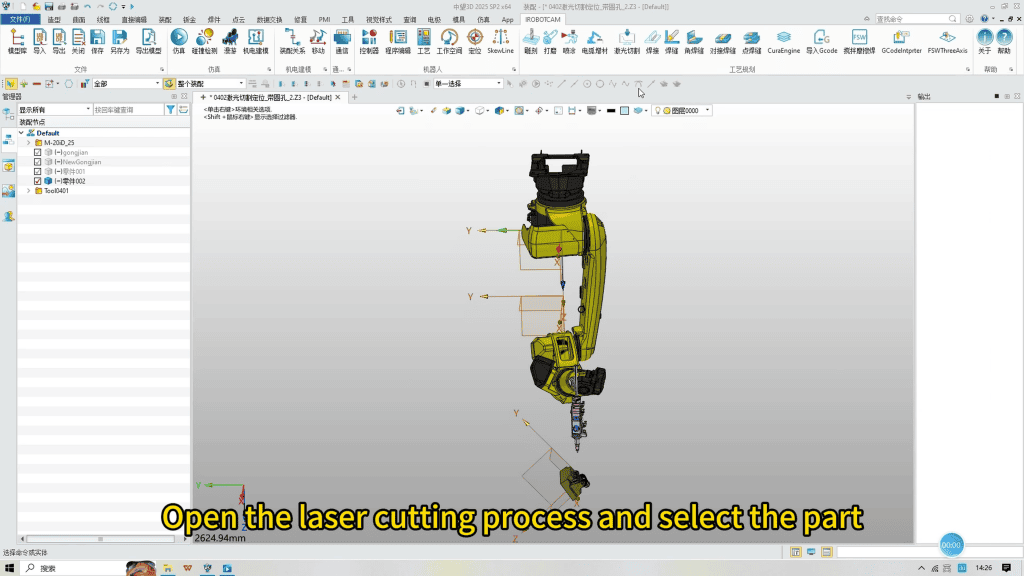
- Leveraging the CAD architecture of the iRobotCAM offline robot programming software, 3D files such as step files can be quickly imported to create digital models.
- Using the laser cutting process commands, a guided panel can be brought up, allowing for quick selection of the parts to be processed.
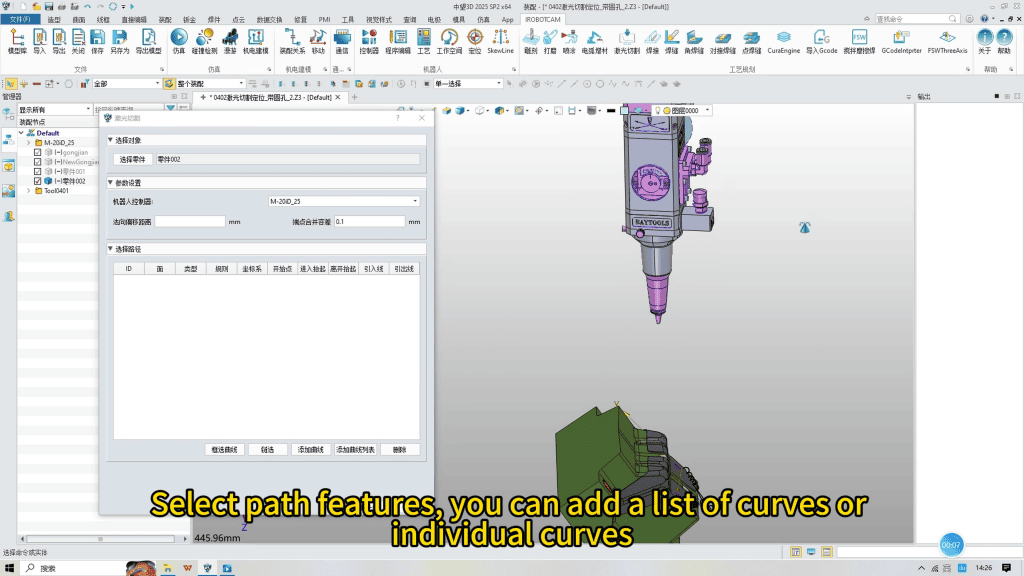
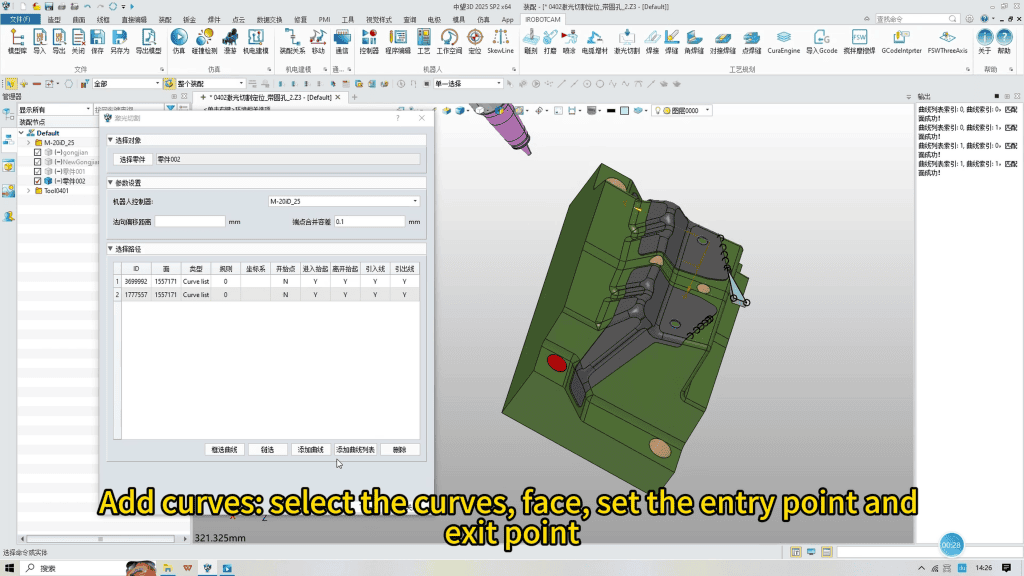
3. For the machining trajectory, by selecting path features, a list of curves or curves can be added to increase the corresponding machining trajectory.
4. For the laser’s up and down cutting trajectory points, you can add a curve list, select the curve list, the surface, and set the entry point, exit point, etc.
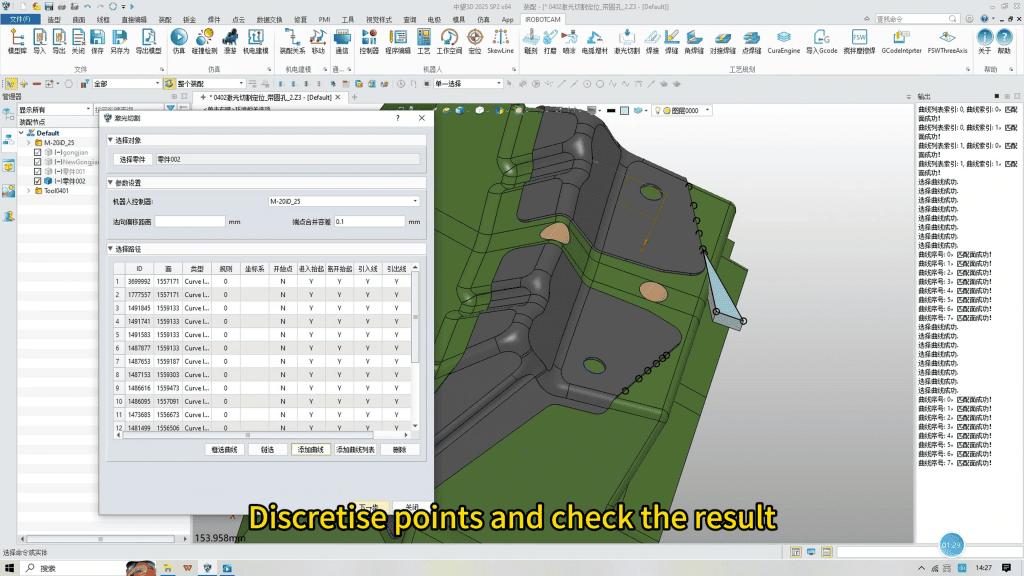
5. The effect can be quickly observed by rapidly discretizing the points.
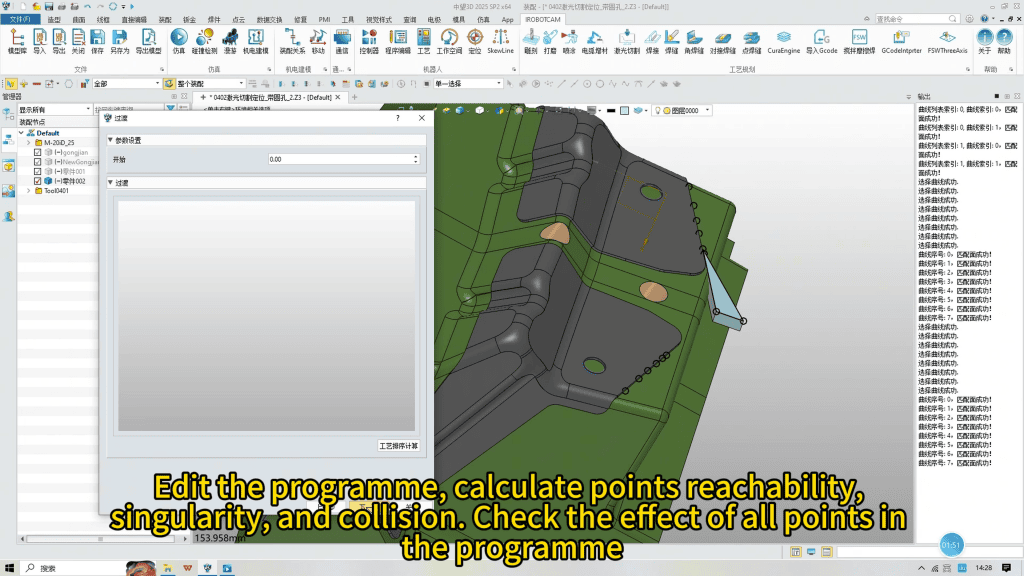
6. Allows for quick program editing, calculation of reachability, singularity, and collision properties of points, and simultaneous viewing of the effects on all points in the program.
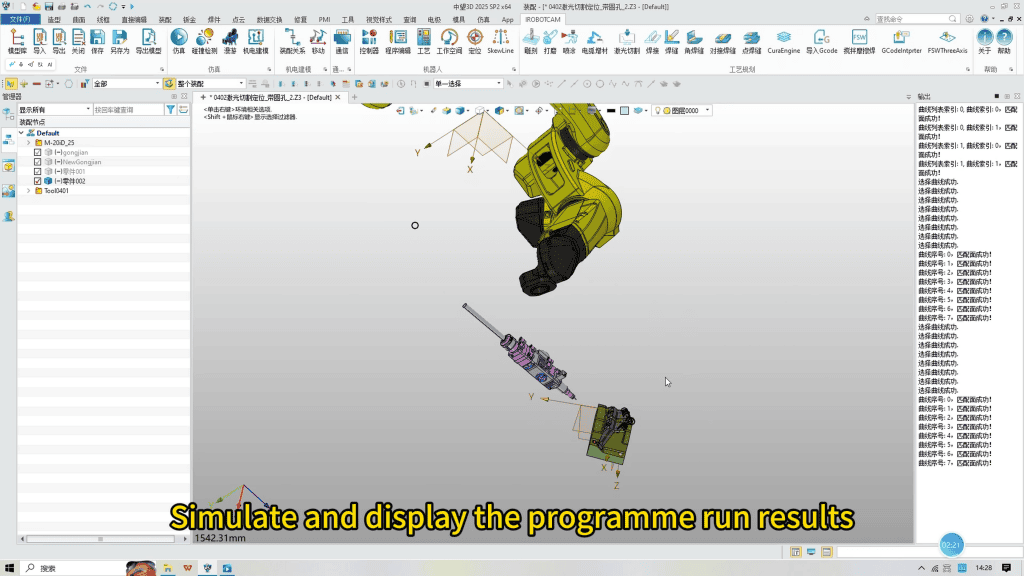
7. By adjusting the program speed, simulations can be executed quickly, and the program’s running effect can be displayed.
The ease of use of iRobotCAM, an offline robot programming software, has been accumulated by major robot manufacturers through application and continuous feedback. The application of laser processing for robots has become very simple, and it continues to be used in niche scenarios such as aerospace, electronics, and home appliances.
About Nanjing Yueqing Information Technology Co., Ltd.
Nanjing Yueqing Technology is committed to creating the open iRobotCAM embodied intelligent robot design and simulation platform, which is an integrated solution for embodied intelligent design, electromechanical design, offline programming, and virtual debugging.
iRobotCAM website: www.iRobotCAM.com, contact email: cooperation@iRobotCAM.com