Summary : The key to robotic laser technology lies in high precision. The ability to achieve high-precision manufacturing using lasers is the foundation for high-performance or high-precision equipment in various industries such as aerospace, automotive, and machinery. Through iRobotCAM, which is based on a 3D CAD platform architecture, high-precision programming capabilities can be achieved, thereby enabling high-precision robotic laser processing.
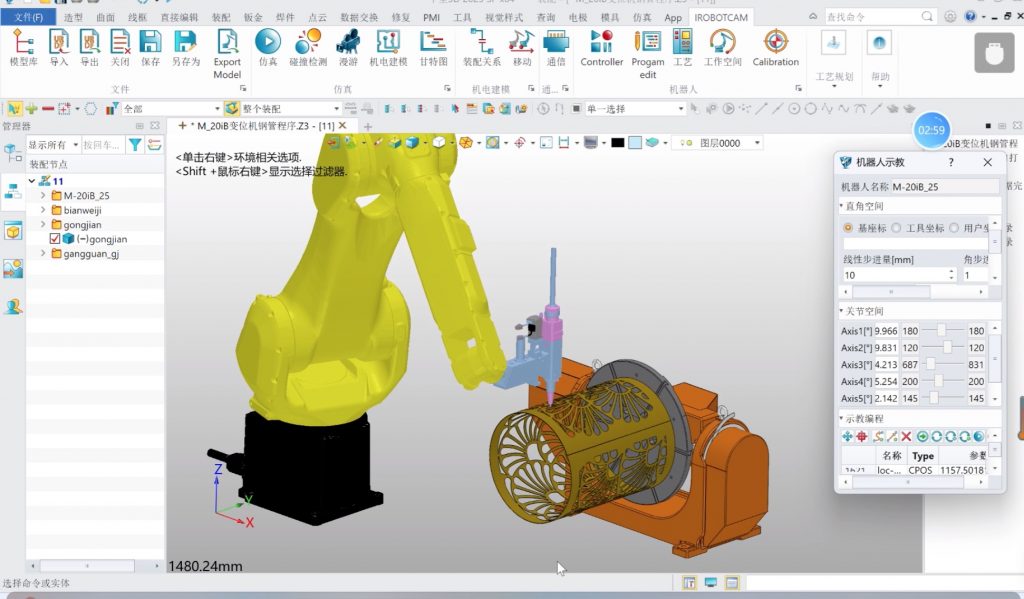
The key to robotic laser technology lies in high precision. The ability to achieve high-precision manufacturing using lasers is the foundation for high-performance or high-precision equipment in various industries such as aerospace, automotive, and machinery. But what are the challenges in applying laser technology in the robotics industry, and how can we quickly implement robotic laser technology ?
Let’s first understand the general process of robotic laser processing:
Import robot and workpiece > Implement trajectory programming > Workpiece positioning and robot calibration > Full-scene simulation > Code output and robot machining
As can be seen from the above process, the key to laser technology lies in the establishment of a digital environment and the output and simulation of code. Taking iRobotCAM offline programming software as an example, we will explain how to use iRobotCAM to achieve efficient application of robot laser technology.
- Utilizing iRobotCAM’s capabilities based on the domestically developed ZW3D 3D CAD kernel, equipment and processes can be quickly digitized through modeling.
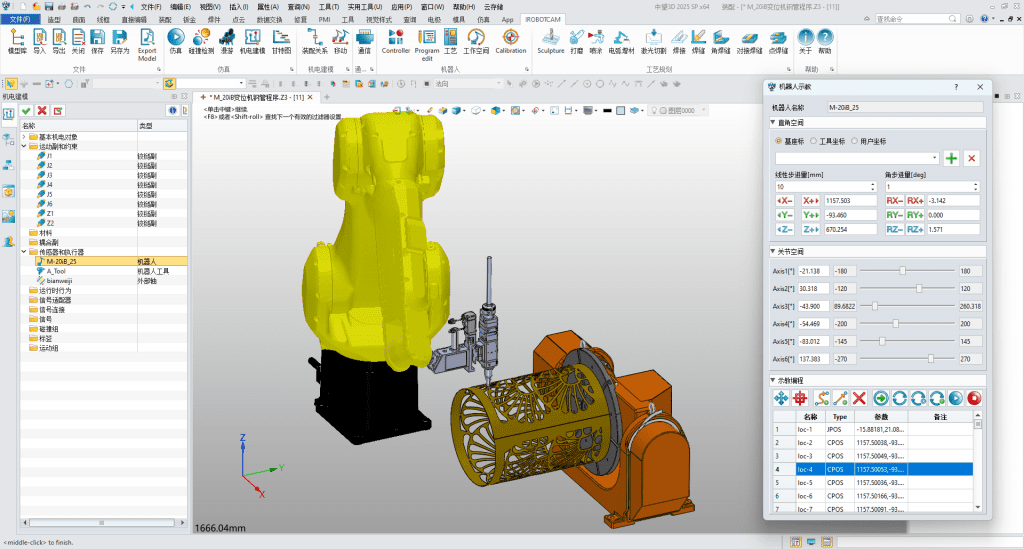
2. Utilizing iRobotCAM’s machine library allows for the rapid creation of robots or tools related to laser applications, avoiding the need to repeatedly build basic parts libraries in the future. This helps companies efficiently use digital models.
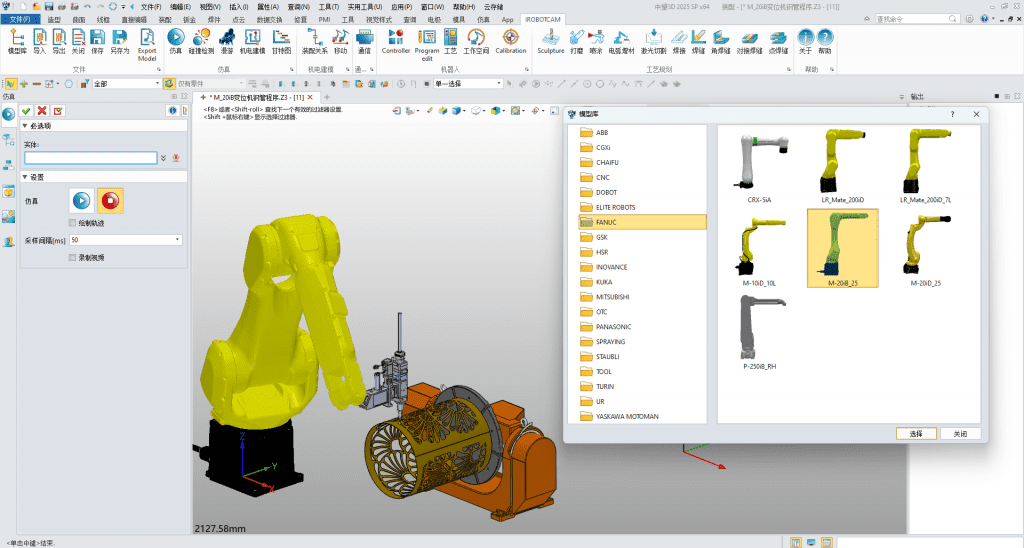
3. Utilizing iRobotCAM’s unique positioning capabilities, precise workpiece positioning can be achieved quickly to meet the needs of laser processing. More specifically, iRobotCAM can achieve workpiece positioning under various working conditions based on the workpiece’s CAD features.
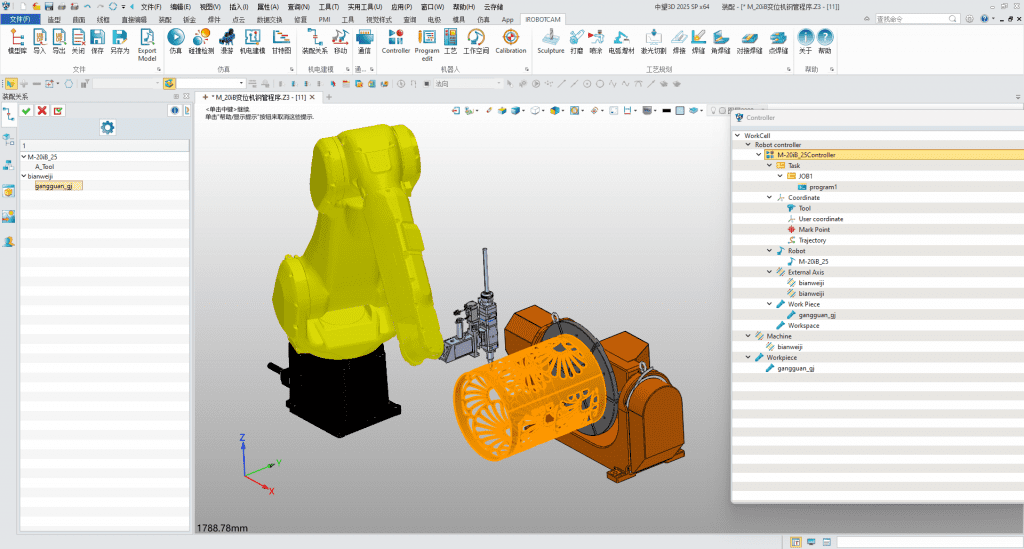
4. Utilizing iRobotCAM’s trajectory generation capabilities, it is possible to generate 5-axis trajectories, enabling the application of laser technology in robots with 7 or more axes.
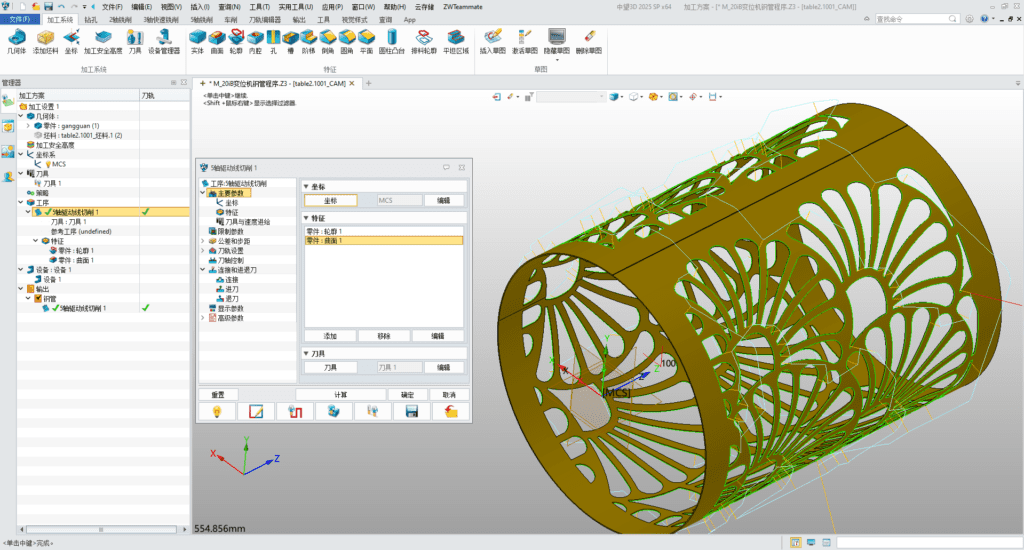
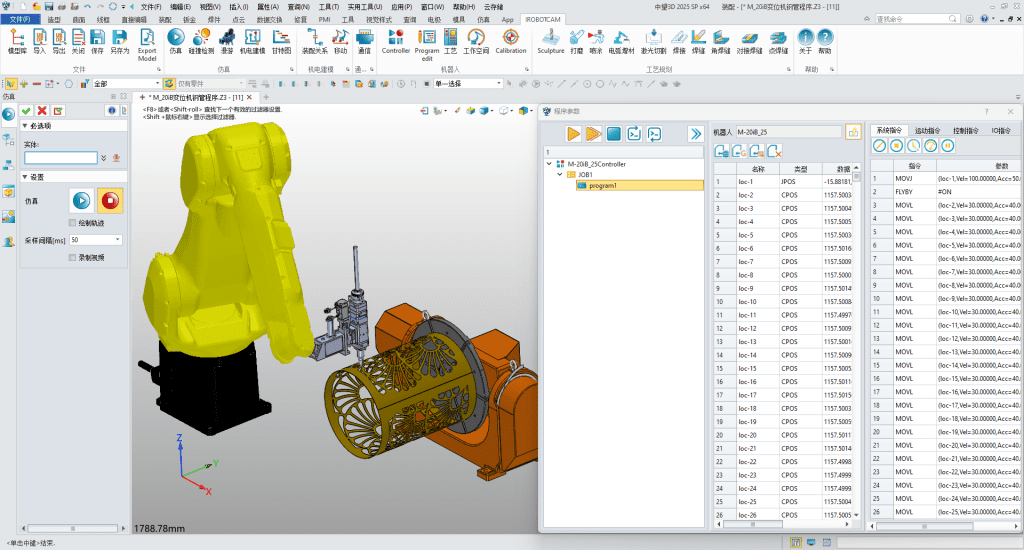
5. Utilizing iRobotCAM’s virtual robot debugging capabilities, programming and virtual simulation of robot laser scenarios can be achieved, allowing for efficient viewing of the robot’s application effects in various processes.
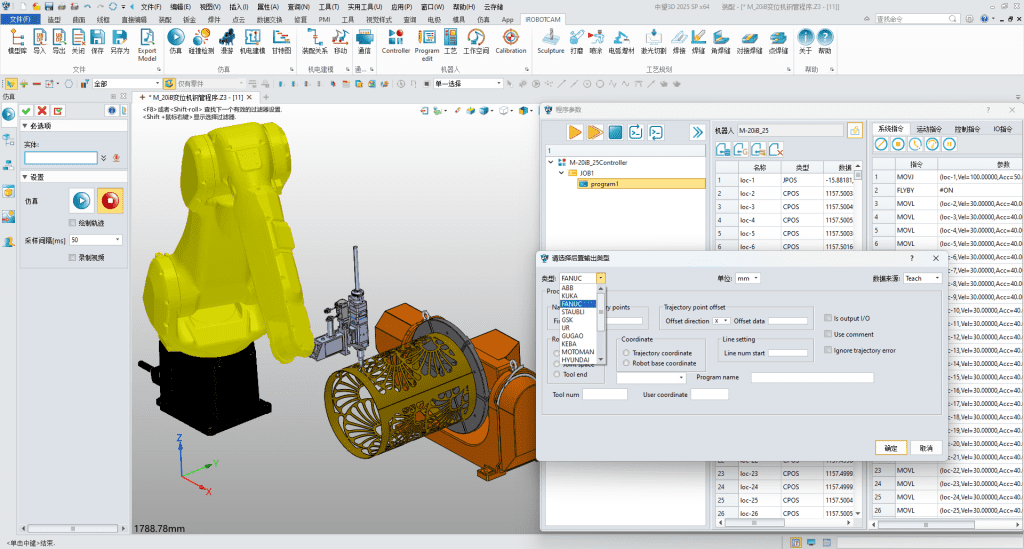
6. Utilizing iRobotCAM’s post-processing capabilities, it can efficiently adapt to various robots, including those from FANUC, Yaskawa, Kuka, Panasonic, GCS, WAS, Turing, and others, allowing for efficient management of multiple brands or devices using a single software.
About Yueqing Technology:
Yueqing Technology is committed to creating the open iRobotCAM robot offline programming platform, which is a digital solution integrating production line electromechanical concept design, robot processing programming simulation, and virtual debugging.
iRobotCAM website: www.iRobotCAM.com, contact email: cooperation@iRobotCAM.com