Summary: Industrial robots are being used more and more extensively across various industries. As the developer of iRobotCAM, a domestically produced offline robot programming software, Yueqing Technology leverages the advantages of its CAD architecture to focus on breakthroughs in high-precision robot machining. For complex robot engraving, iRobotCAM’s rich trajectory strategies enable rapid联动 (linkage/coordination) between robot engraving and positioners.
The application of robotic carving is not limited to flat carving. With the reduction in the cost of industrial robots and the development of offline programming software for robots, how to use robots to achieve complex stone carving is an area of exploration for the industry.
There are two main challenges: first, using industrial robots to perform stone carving involves the application capabilities of robots, such as robot kinematics; and second, generating various complex trajectories when carving the workpiece.
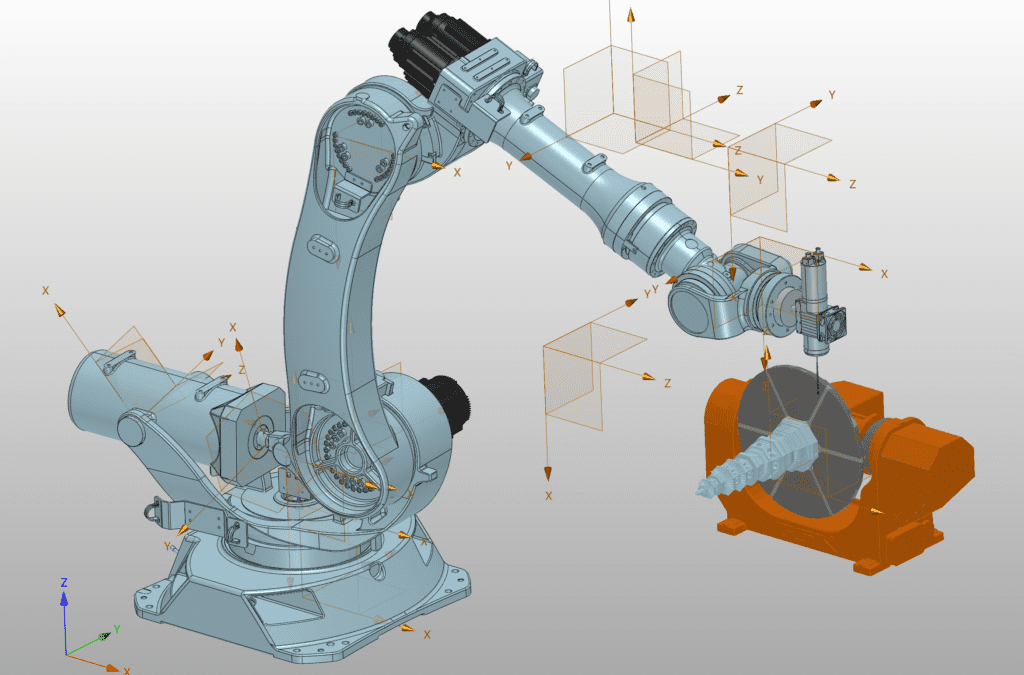
As a representative of domestic robot offline programming software, iRobotCAM has obvious advantages based on the architecture of 3D CAD. Similar to CAM processing, it has a rich variety of robot trajectory generation strategies. Because its accuracy reaches 0.01mm or even micrometer level, which is at least an order of magnitude higher than that of industrial robots, the high precision advantage improves the reliability of the trajectory from the source and ensures the effect of robot processing.
Below, we will use the iRobotCAM offline programming software as an example to demonstrate how to carve a complex stone tower.
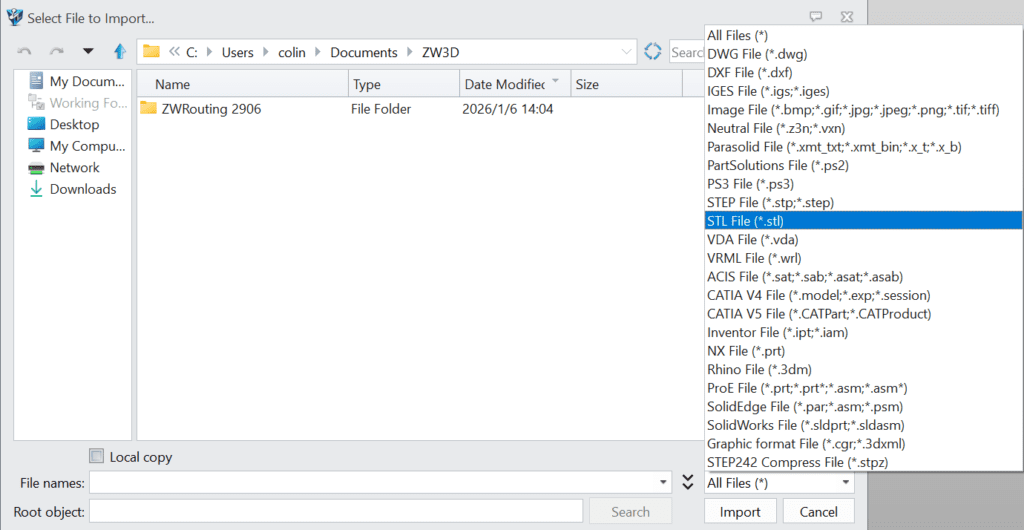
- Leveraging the advantages of CAD architecture, iRobotCAM has significant cross-platform advantages. Based on the ZW3D platform, it can import various file formats including SolidWorks, Catia, NX, Creo, Inventor, STEP, ACIS, etc., to import 3D files such as workpieces and positioners, and establish a digital environment for 3D models.
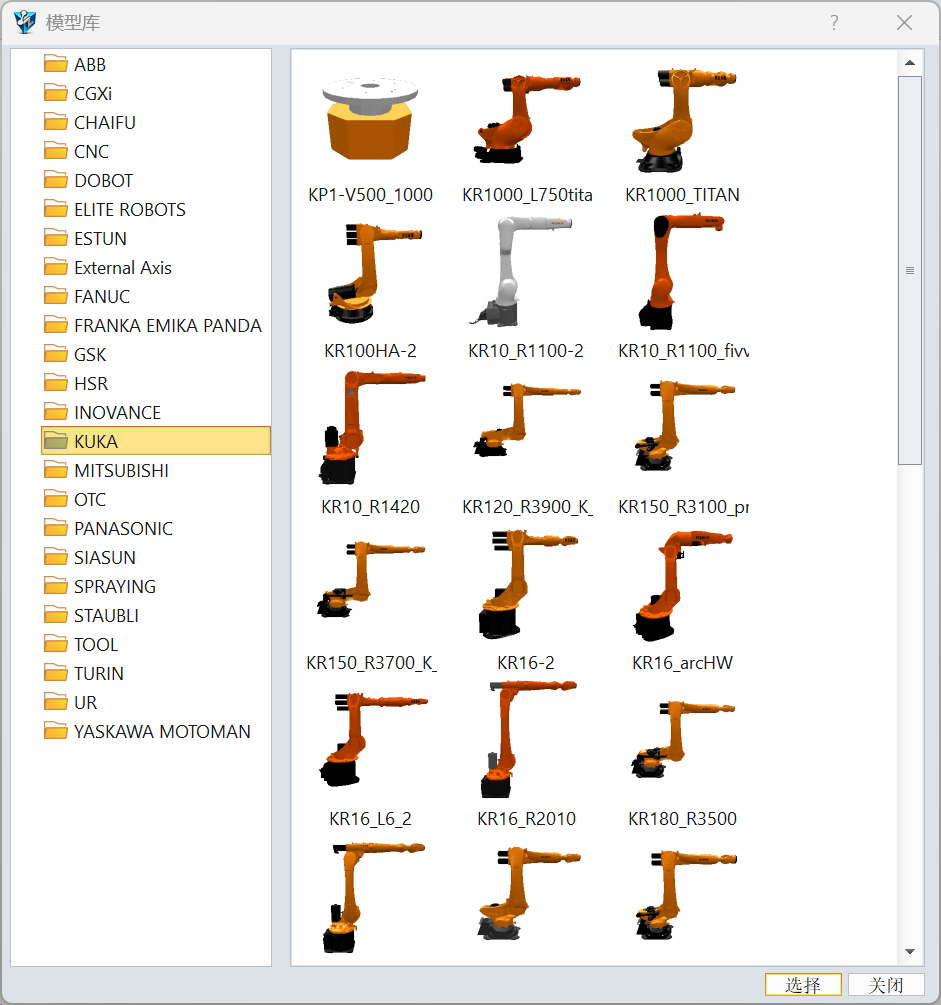
2. Using iRobotCAM’s robot library, you can quickly access hundreds of robot images and intelligently add various custom-designed special robots.
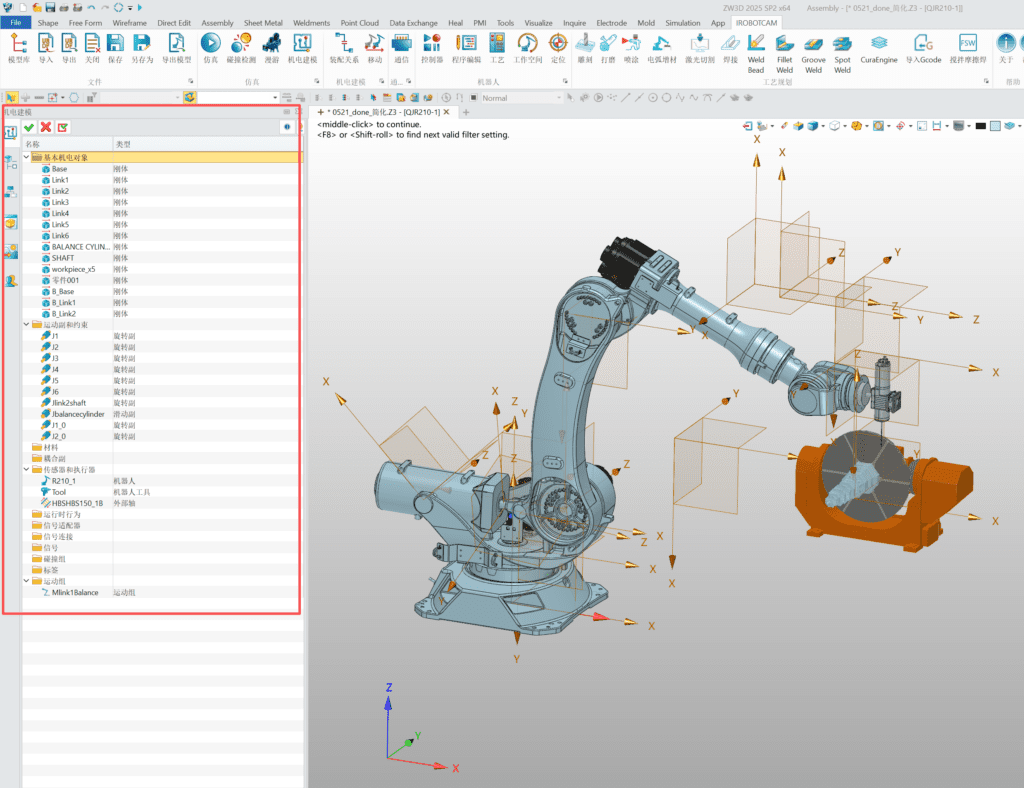
3. Using iRobotCAM’s electromechanical module, rigid bodies can be created, colliders defined, motion groups created, joints defined, etc., to build an electromechanical model of the robot, enabling collision analysis and simulation of the robot.
4. Utilizing iRobotCAM’s rich robot trajectory processing algorithms, various complex five-axis machining trajectories can be generated. Based on the advantages of the CAM architecture, the trajectory accuracy reaches up to 0.01m, as well as micron-level accuracy, ensuring high precision at the data source and further guaranteeing the machining effect of the machine.
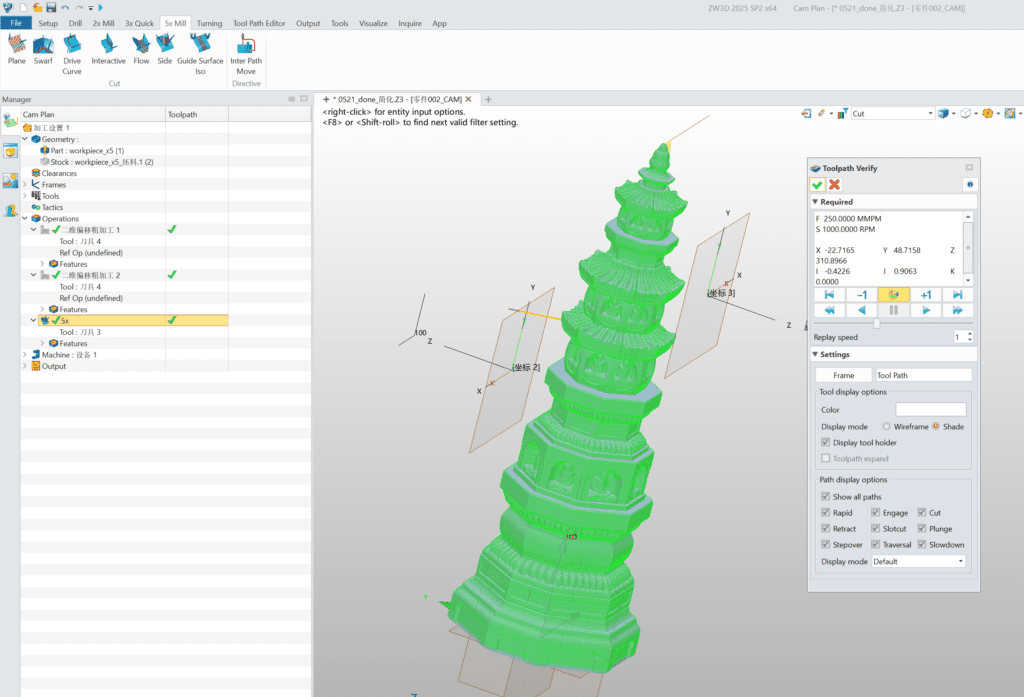
5. Convert CAM trajectories to iRobotCAM robot trajectories using iRobotCAM. Further utilize iRobotCAM’s robot simulation capabilities to intuitively view robot trajectory movement, detect collisions, and quickly export post-processing programs to meet the carving needs of various robots.
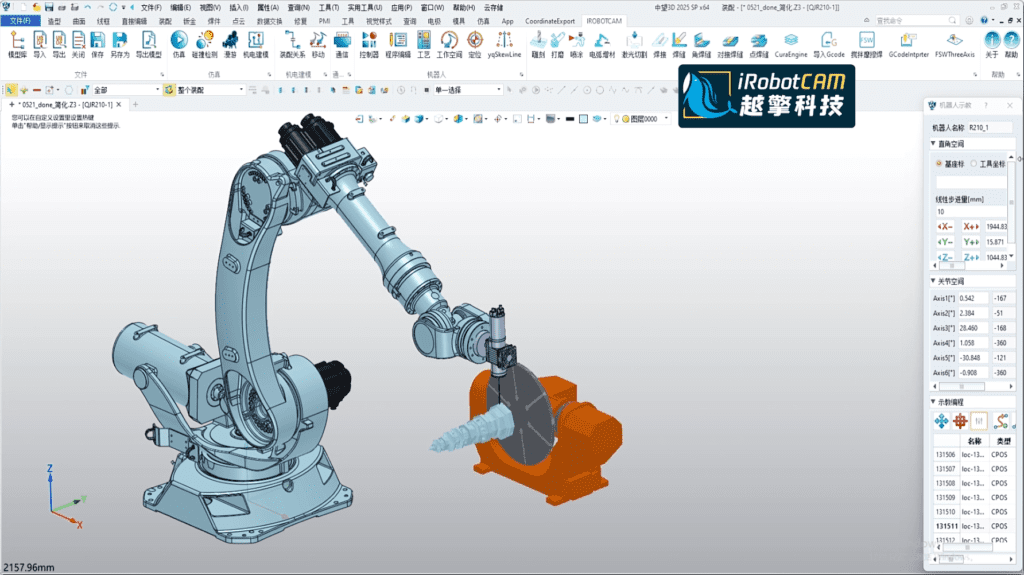
Taking a complex stone tower as an example, iRobotCAM uses a 5-axis trajectory algorithm based on a CAD architecture to generate the trajectory of the statue. At the same time, leveraging iRobotCAM’s advantages in robot motion and simulation, it enables robot carving applications.
About Nanjing Yueqing Information Technology Co., Ltd.
Nanjing Yueqing Technology is committed to creating the open iRobotCAM embodied intelligent robot design and simulation platform, which is an integrated solution for embodied intelligent design, electromechanical design, offline programming, and virtual debugging.
iRobotCAM website: www.iRobotCAM.com, contact email: cooperation@iRobotCAM.com